
RGBCCT COB LED Strip, RGB + Tunable-White For Complete Smart Interior Lighting Solutions
Product Description
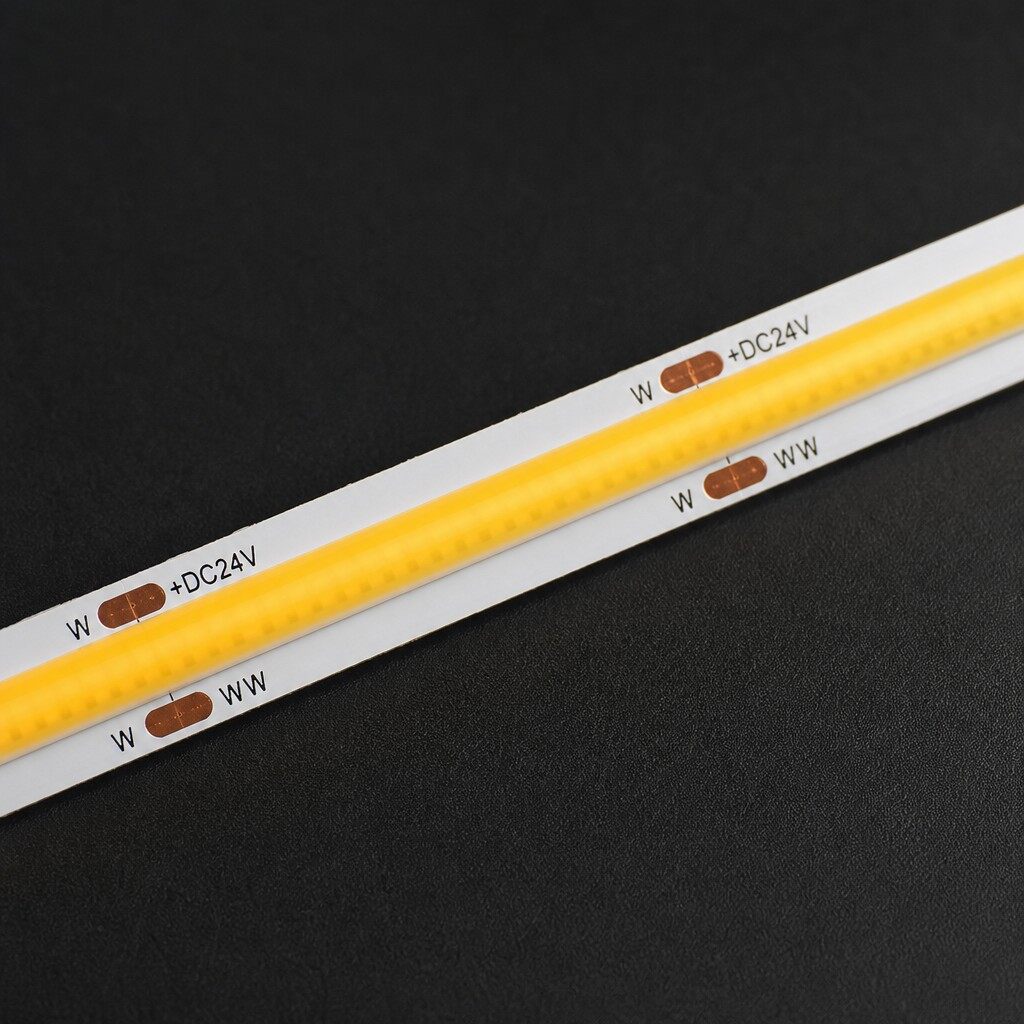
RGB+CCT 5-in-1 COB LED strip combining full RGB color changing with tunable white (2700K-6500K) in a single strip. The most versatile COB strip offering complete lighting control — from vibrant colors to adjustable white light. DC12V/DC24V safe voltage with professional-grade color accuracy.
Key Features
- RGB+CCT 5-in-1 chip ultimate versatility
- Full color plus tunable white 2700K-6500K
- DC12V/DC24V safe low voltage operation
- Professional grade color accuracy CRI>90
- Compatible with advanced multi-channel controllers
Detailed Specifications
Technical Specifications
Parameter | Specification |
|---|---|
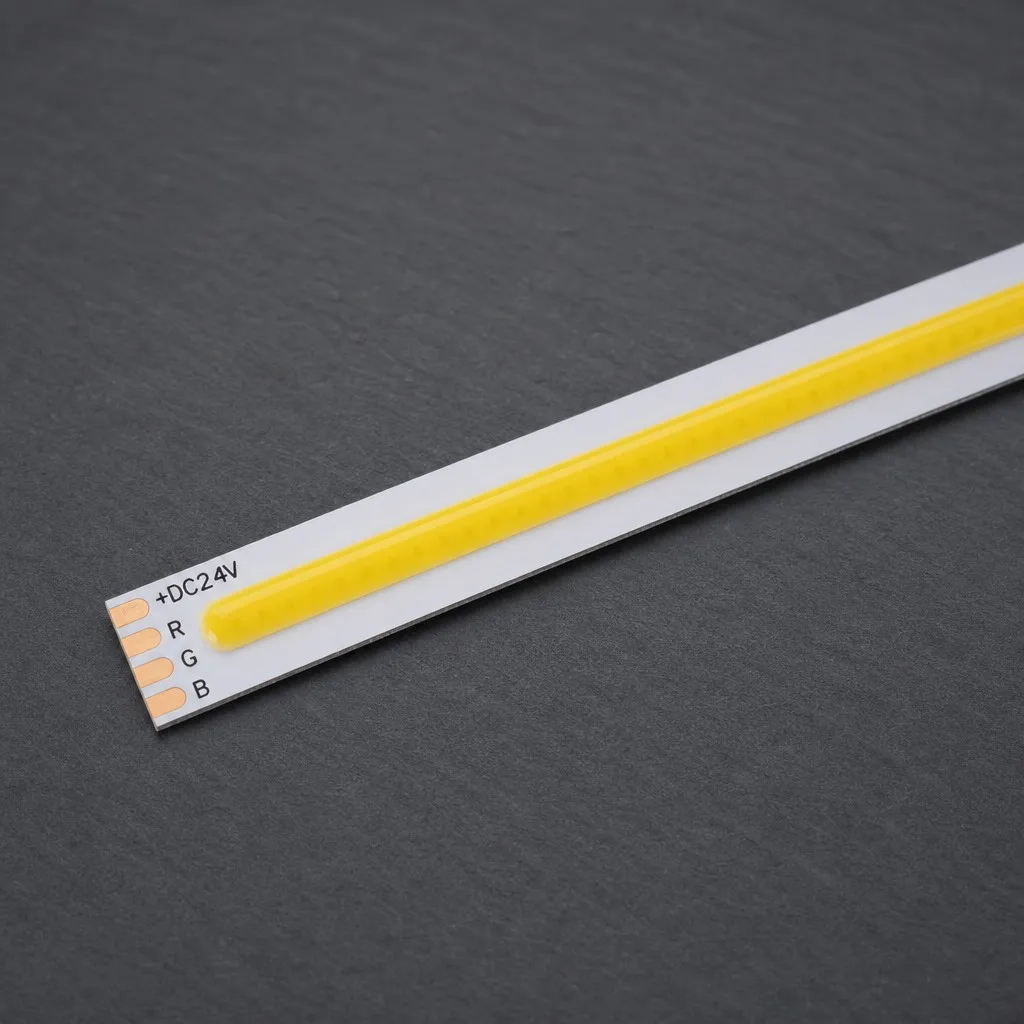
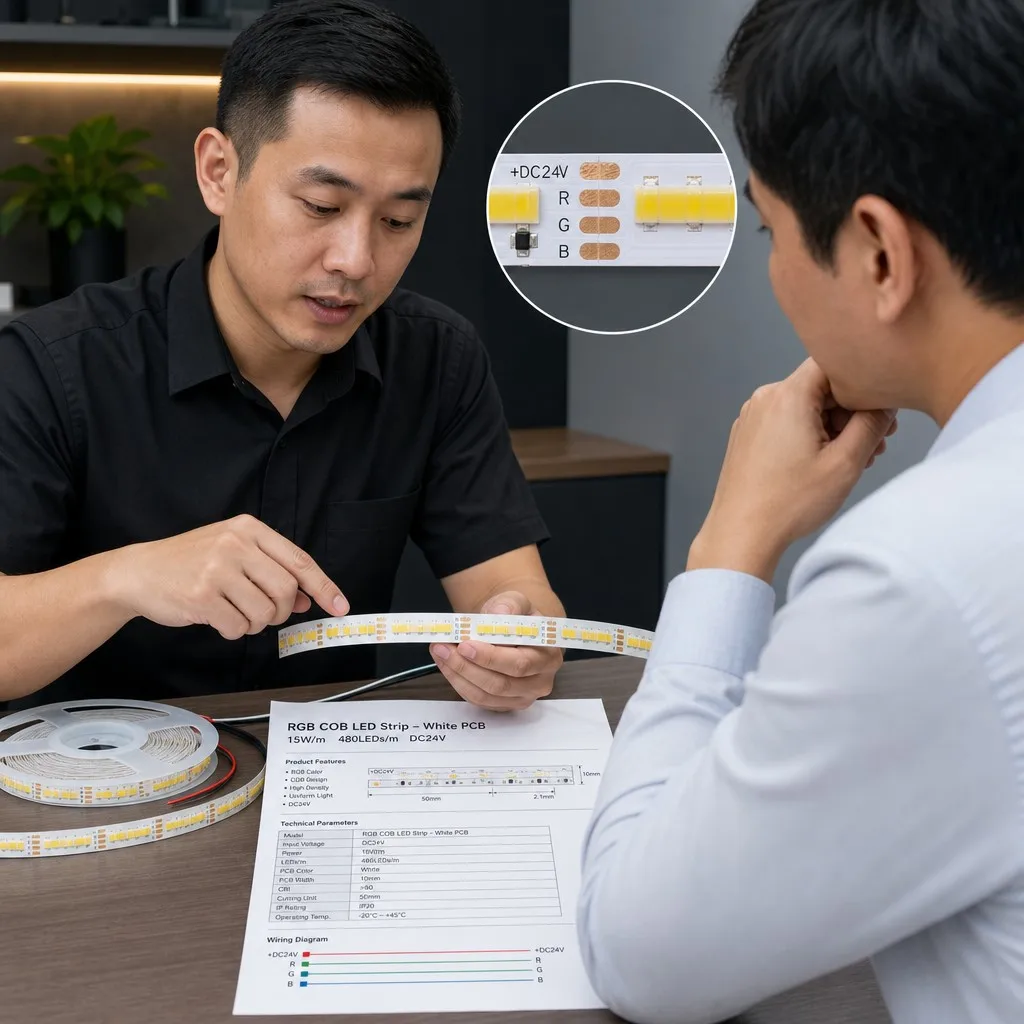
LED Density | 480 LEDs/m (tri-chip RGB chip-on-board) |
Power Consumption | 15W/m |
Strip Width | 10mm |
Operating Voltage | DC24V |
Cutting Unit | 50mm (cutting marks clearly indicated on the strip) |
PCB Type | White PCB — professional double-sided 2oz (35um) copper for durability and conductivity |
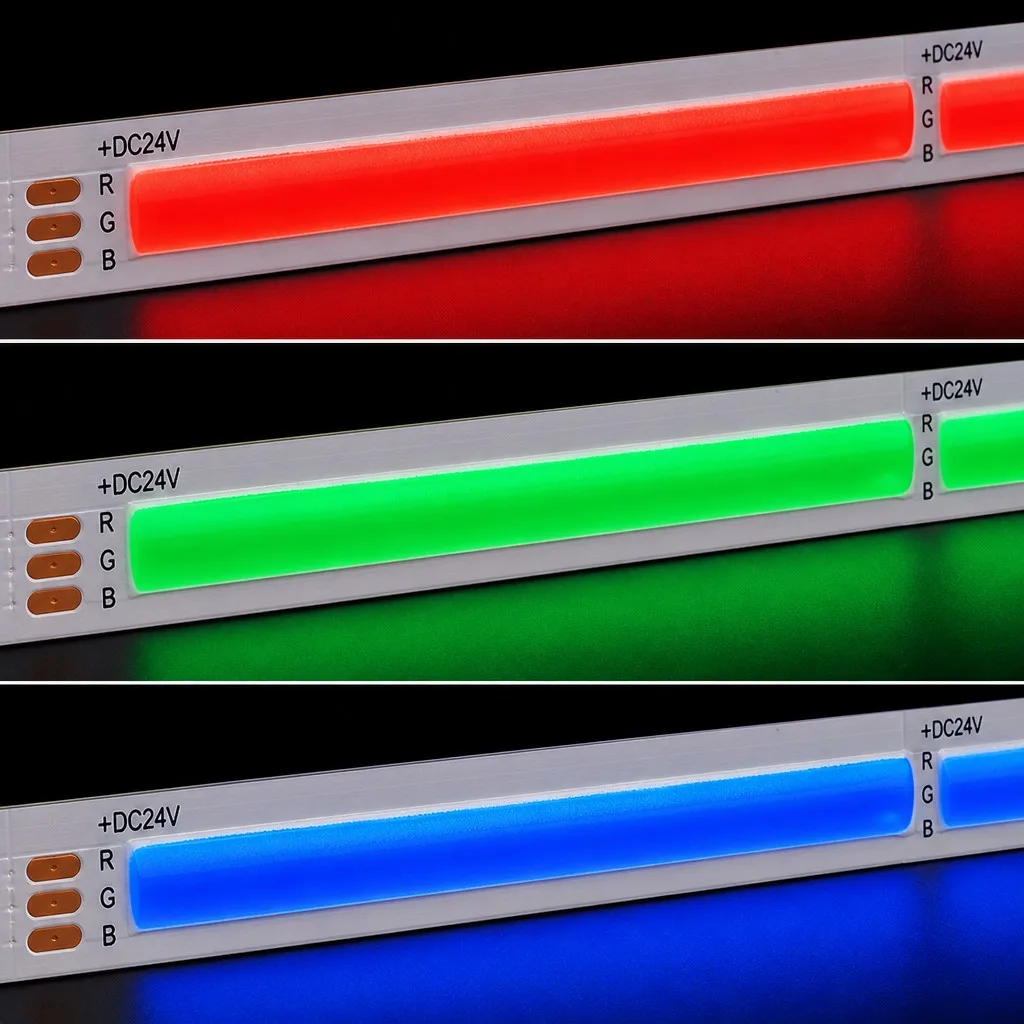
Color Capability | Millions of colors — RGB mixing, static, dynamic and gradient modes |
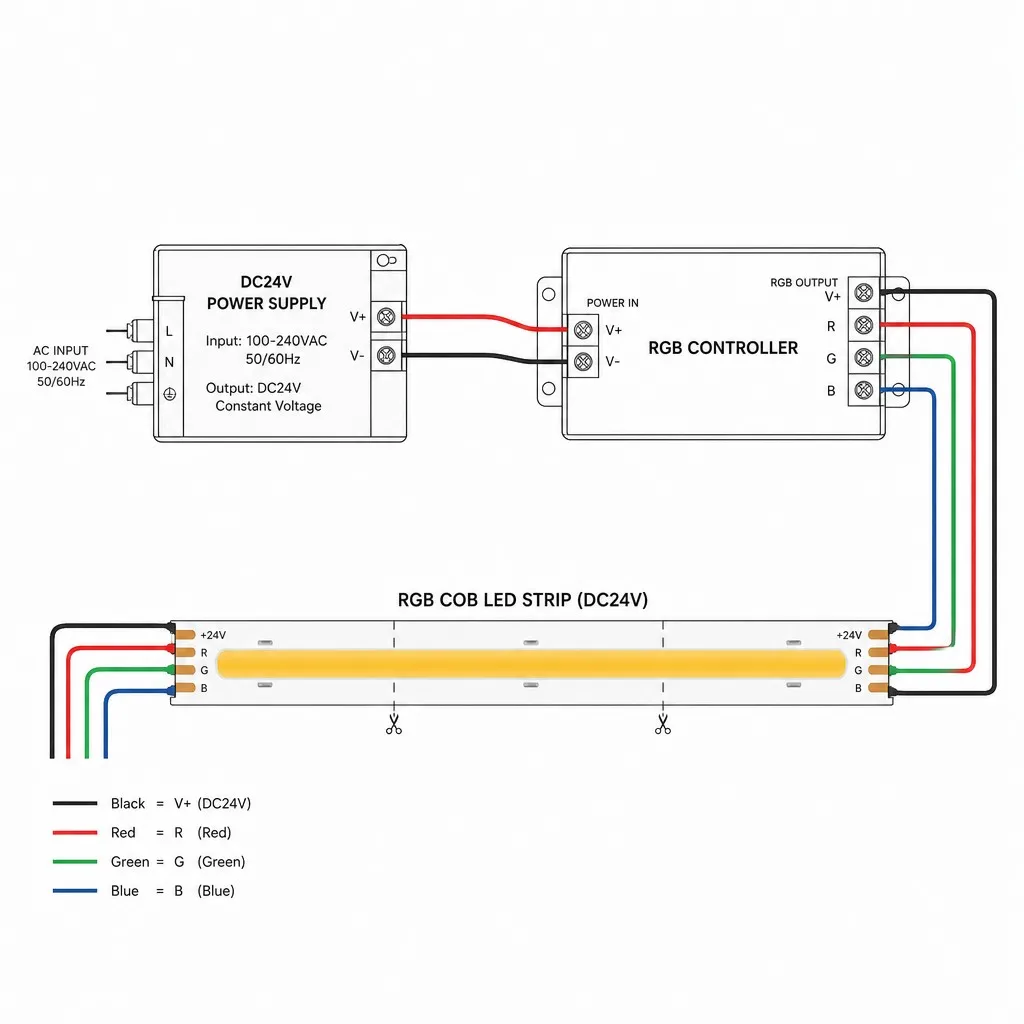
Wiring | 4-wire connection (V+, R, G, B) for RGB control |
Dimmable | Yes — 0-100% brightness with RGB controller |
Working Lifespan | 50,000 hours |
Protection Rating | IP20 / IP65 / IP67 options |
Warranty | 3 years |
Seamless Spectrum: Millions of Colors
Traditional RGB strips use exposed tri-chip SMD LEDs, which cast individual colored dots and break the light line at every chip. The RGB COB series eliminates this entirely: red, green and blue chips are embedded together inside each COB package and mixed optically through the continuous phosphor surface, producing a perfectly seamless color flow with zero visible dots. The result is a light line that melts through the spectrum — from deep reds to electric blues, from sunset ambers to cool cyans — in smooth, liquid transitions rather than stepped jumps. For architectural mood lighting, this means color becomes an atmospheric material: a slowly shifting gradient along a wall cove, a synchronized pulse across a bar counter, or a cinematic wash behind a display wall, all from one invisible light source.
Pro-Grade Thermal Management
Full-color operation drives every channel simultaneously — at 15W/m, the strip works harder than single-color cousins, making thermal management the defining engineering challenge. The RGB COB series answers with a professional double-sided 2oz (35um) copper PCB: the double-sided copper doubles the conductive cross-section, reducing resistive heat generation at full RGB output, while acting as a continuous lateral heat spreader across all 480 chip packages. Installed in an aluminium profile, the strip maintains controlled junction temperatures even during long dynamic color sequences, protecting the LED chips, the phosphor layer and the color consistency of the entire installation. This is the difference between a decorative toy and an architectural lighting instrument.
Sophisticated Commercial & Home Applications
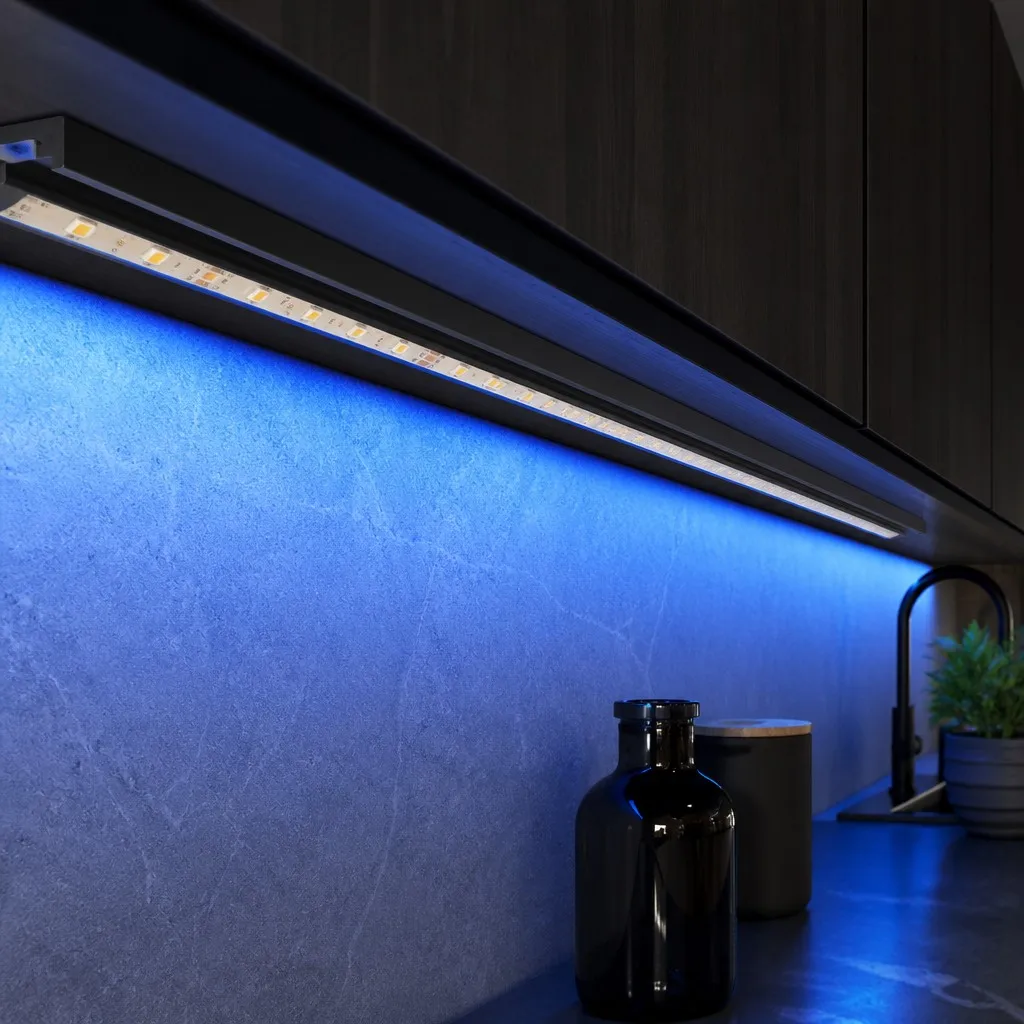
The RGB COB series is built for spaces where atmosphere is the product. In bars and lounges, continuous color washes behind counters, shelving and ceiling coves create a living environment that shifts with the music and the hour. In private cinemas and media rooms, synchronized gradient lighting around the screen and under seating reduces eye strain and heightens immersion. In flagship retail stores, slow color transitions draw attention to displays without shouting, while accent colors reinforce brand identity. At home, the strip brings the same cinematic quality to living rooms, stairwells and home bars — controlled from a phone app, a wall panel or a smart-home hub, with scenes that can be saved and recalled at a touch.
Engineering Installation Guide
The RGB COB strip uses a 4-wire connection — positive (V+) plus red (R), green (G) and blue (B) channels — the industry standard for RGB control. (1) Cut at the marked 50mm points with sharp scissors. (2) Terminate the four solder pads or clamp connectors, matching polarity carefully. (3) Connect to an RGB controller (IR, RF, WiFi, DMX or SPI) before the power supply. (4) Size the driver at 1.2x total wattage (metres x 15W/m) — a 10m run needs a 180W certified constant-voltage supply. (5) Feed from both ends for runs above 5m to maintain brightness and color uniformity along the length. (6) For damp areas, order IP65/IP67 encapsulated versions and seal all end terminations with silicone caps or heat-shrink end seals before powering.
Advanced Technical FAQ
1. What is the LED configuration of the RGB COB strip?
480 RGB chip packages per metre, each containing red, green and blue die inside a single COB package, optically mixed through the phosphor surface for seamless color output.
2. How many colors can the strip display?
With 8-bit per channel control, the strip displays over 16 million color combinations, plus dynamic modes such as breathing, flashing, chasing and gradient transitions between any two colors.
3. Why does the COB construction matter for RGB?
COB packaging mixes the three color channels optically before emission, eliminating the individual colored dots that SMD RGB strips show — the fundamental difference between a decorative string and an architectural light line.
4. Which controllers are compatible?
Standard RGB controllers (IR/RF remote, wall panel, WiFi app), DMX512 decoders, SPI controllers for pixel-style effects, and smart-home hubs supporting RGB scenes. Confirm the controller output voltage matches DC24V.
5. How do I synchronize multiple strips and controllers?
Use controllers from the same family and pair them via their sync functions, or use DMX/SPI addressing for larger installations. For identical scenes across a venue, master-slave pairing keeps all zones in phase.
6. How do I maintain color consistency across a large installation?
Order all reels at the same production batch, request binning reports, and drive all channels from matched controllers. Binned chips keep red/green/blue output within tight tolerance across reels.
7. What are the voltage drop considerations at 15W/m?
At DC24V, a single feed supports up to 5m with acceptable drop; beyond that, feed from both ends or inject power every 5m. The 2oz copper PCB halves resistance compared with standard boards, extending practical run lengths.
8. How should I choose between IP20, IP65 and IP67 versions?
IP20 suits dry interior coves and channels. IP65 silicone extrusion protects against dust and splashes but reduces output slightly and increases bend radius. IP67 fully potted versions suit outdoor signage and wet zones.
9. What is the minimum bend radius?
Approximately 30mm for the 10mm PCB. For sharp corners, cut at a marked 50mm point and join with a 4-wire corner connector.
10. Can I dim the strip without losing color accuracy?
Yes — brightness is controlled independently of color mixing, so dimming preserves the selected color at any level. Use a controller that dims all four channels in unison.
11. How does the 2oz copper PCB support full-color operation?
At 15W/m with all channels active, the double-sided 2oz copper spreads heat laterally and halves conductor resistance, keeping the strip thermally stable and color-consistent during long dynamic sequences.
12. What is the lifespan under continuous color operation?
50,000 hours (L70) at rated voltage with proper profile mounting. The 2oz copper and controlled junction temperature preserve color output over the strip's life.
13. Can the strip produce white light?
Yes — with all three channels at full output the strip produces a cool white; warmer white tones are achievable by adjusting the RGB balance. For dedicated tunable white output, our CCT series is the better choice.
14. What is the minimum order quantity for wholesale?
Standard MOQ is 50 reels (500m), with sample reels dispatched within 24-48 hours. Project-based bulk orders and staged deliveries can be arranged.
15. What OEM options are available?
Custom lengths and reel sizes, private-label printing, custom connectors, matched-bin multi-reel programs and project-specific technical documentation.
16. How do I calculate the total power requirement?
Metres x 15W/m x 1.2 headroom. A 12m run needs a 216W certified constant-voltage supply; for reliability use two 120W drivers with separate feeds.
17. Can the strip be used outdoors?
With IP67 potting and sealed terminations, yes — for exterior signage, canopy lighting and wet zones. Use proper end caps and waterproof connectors.
18. How do dynamic gradient modes work?
The controller interpolates between two or more color setpoints across the strip length and over time, producing a flowing wave of color — ideal for bars, stage walls and feature installations.
19. Which certifications apply?
Strips are manufactured to CE, RoHS and UL-relevant requirements, with batch test reports available on request.
20. How should the strip be stored?
Store reels in original packaging at room temperature and low humidity. Unroll only the required length and avoid tight coils for extended periods.
21. What happens if I connect channels in the wrong order?
Colors will be remapped (e.g., red appears as green). Terminate carefully by polarity; most controllers offer channel remapping in settings to correct wiring without rewiring.
22. Why choose LEDLetsGo for RGB COB projects?
In-house COB manufacturing, tri-channel binning, batch testing, flexible MOQ and commercial-project engineering support make LEDLetsGo a complete partner for architectural color lighting worldwide.
Engineering Notes: The Physics of Seamless Color
Seamless color begins at the chip level: red, green and blue die placed inside one COB package, mixed through the continuous phosphor surface before emission. At 480 packages per metre on a double-sided 2oz copper spine, driven at 15W/m on DC24V with 4-wire control, the system delivers millions of colors as a single continuous light line. The 50mm cutting unit aligns with standard profile segments, and the IP20/IP65/IP67 family covers every installation zone from dry bars to wet exteriors. For designers, this is color as a building material — seamless, controllable and engineered to last.
23. How do I verify color output consistency across a project?
Run all reels from matched-bin production batches and drive them with synchronized controllers. Sample three points per run at the same scene and compare channel levels; matched bins should hold RGB output within tight tolerance, with any deviation traceable to wiring resistance rather than chip variance.
24. What should I do with the unused color channels?
If an installation uses only static white or a single accent color, unused channels can be terminated and capped; the controller can still drive the active channel at full brightness. Keep the spare channel leads insulated to avoid shorts.
Specification Compliance Note
All specifications are verified against production batch reports available on request: luminous flux per channel, channel current draw, continuity per reel and dynamic-mode endurance. Electrical characteristics are measured at 25°C ambient with the strip mounted on an aluminium profile; derate power by approximately 5% for enclosed coves and 10% for IP67 encapsulated versions.
Ready to Get Started?
Contact us today for professional COB LED strip solutions tailored to your needs. We offer competitive bulk pricing and fast worldwide shipping.