Short answer: Choose LED Neon Flex when a project prioritizes low-voltage installation, flexible shapes, lighter handling, easier maintenance, and a protected continuous light line. Choose traditional glass neon when the project specifically requires the character of rigid glass tubing, exposed electrode details, or an established restoration-style sign aesthetic. The right choice depends on the sign geometry, installation environment, access for maintenance, electrical design, and the visual result—not on appearance alone.
What Is the Difference Between LED Neon Flex and Traditional Neon?
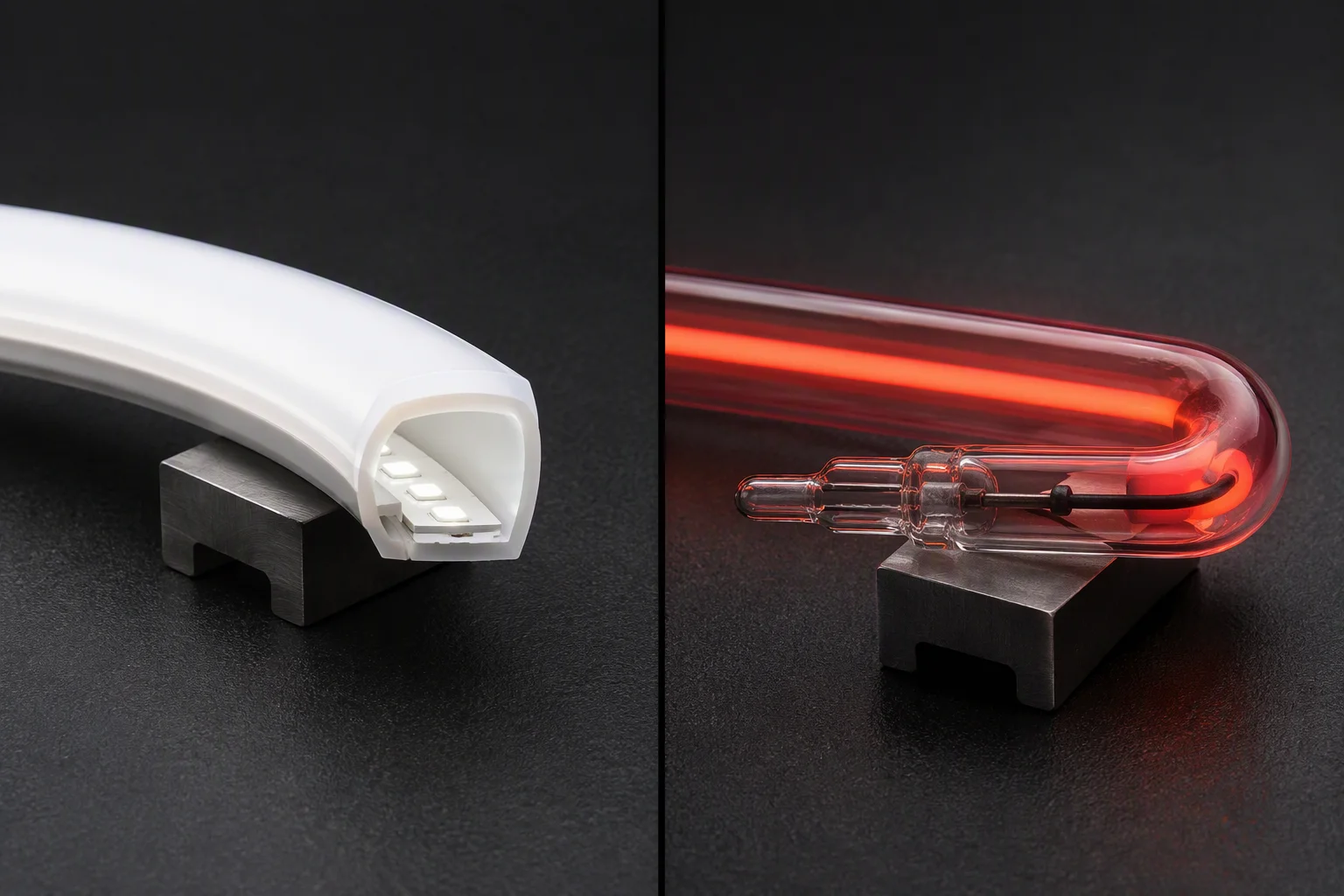
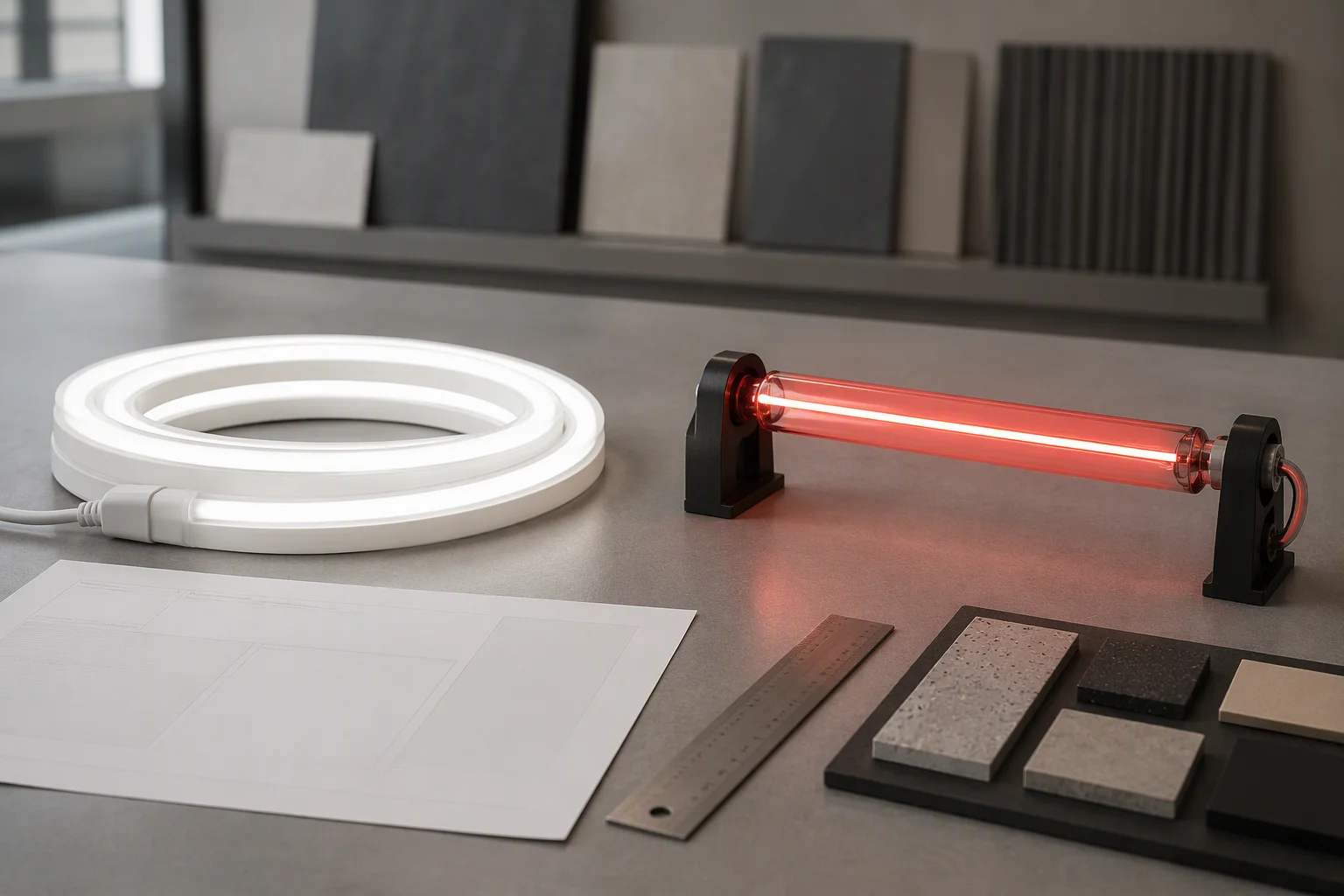
LED Neon Flex is a flexible lighting product that places LED light sources inside a silicone or polymer housing. The housing diffuses the light and protects the internal components while allowing the product to follow curves and shaped lettering. Traditional neon uses gas-filled glass tubes that are formed into a rigid shape and energized through electrodes. The two technologies can produce a similar luminous outline, but they are different products with different installation and service requirements.
The most useful comparison is therefore not simply “which one is brighter?” A specifier should compare the complete system: light source, housing, power supply or transformer, mounting method, wiring, environment, service access, and expected visual character.
How Do the Two Technologies Differ in Construction?
LED Neon Flex uses a flexible, diffused housing
LED Neon Flex is supplied as a continuous flexible line. Its outer housing controls the visible light and protects the LED circuit from routine handling and the surrounding environment. Depending on the product design, the light can be emitted from the top, side, or another defined face, so the bending direction and mounting orientation must be confirmed before installation.
For a project specification, do not describe every LED Neon Flex product as interchangeable. Confirm the profile, emitting direction, voltage, cut and connection method, bend direction, colour temperature or colour option, and environmental rating for the selected SKU.
Traditional neon uses formed glass tubes and electrodes
Traditional neon is made from rigid glass tubing shaped to the sign design. The tube, gas fill, electrodes, transformer, and mounting hardware work as one high-voltage sign system. The glass itself creates a recognizable visual character, especially when the tube is visible rather than hidden behind an opaque face.
Because the glass tube is rigid and fragile, the sign usually requires more careful transport, more precise support, and specialist service when a tube or electrical component fails.
LED Neon Flex vs Traditional Neon: Comparison Table
Decision factor | LED Neon Flex | Traditional glass neon |
|---|---|---|
Form and shaping | Flexible line that can follow approved curves and profiles | Rigid glass tube formed to a fixed sign shape |
Light appearance | Continuous diffused line with a controlled LED colour option | Distinctive gas-tube glow with visible glass character |
Electrical architecture | Typically paired with a suitable low-voltage power supply and control system | Uses a dedicated transformer and high-voltage sign wiring |
Installation | Often installed with channels, clips, or a defined mounting method | Requires precise glass supports, wiring, and transformer placement |
Handling | Lighter and easier to route around approved curves | Glass tubes need careful packing, transport, and handling |
Maintenance | Usually allows modular replacement of sections or components, subject to the product design | Tube, electrode, transformer, or wiring service may require specialist work |
Outdoor planning | Depends on the complete rated product and sealed installation details | Depends on tube construction, electrical enclosure, transformer, and sign workmanship |
Best fit | Curved architectural accents, retail interiors, cabinets, hospitality, and flexible signage | Classic exposed-tube signage, restoration work, and projects where glass character is central |
Procurement priority | Profile, voltage, bend direction, cut/connection method, colour, and mounting system | Tube design, gas and electrode system, transformer, supports, and service capability |
Which Option Is More Energy Efficient?
LED Neon Flex can offer an energy-efficiency advantage because the light is produced by LEDs and the system can be designed around a suitable low-voltage power supply. The real result still depends on the product efficacy, installed length, power density, operating schedule, dimming method, and power-supply losses. A fair comparison should use the complete installed system rather than comparing only the name of the technology.
Traditional neon should not be judged from a generic wattage assumption either. Tube length, gas fill, transformer selection, operating time, and sign design all affect consumption. For a project quotation, request the rated input power or power per length for the exact LED Neon Flex SKU and compare it with the complete traditional neon system, including the transformer.
For general LED lighting context, the U.S. Department of Energy describes LEDs as highly efficient light sources and discusses the facility-level considerations involved in adopting LED technology. See the Department of Energy LED technology overview.
Which Technology Is Easier to Install?
LED Neon Flex installation
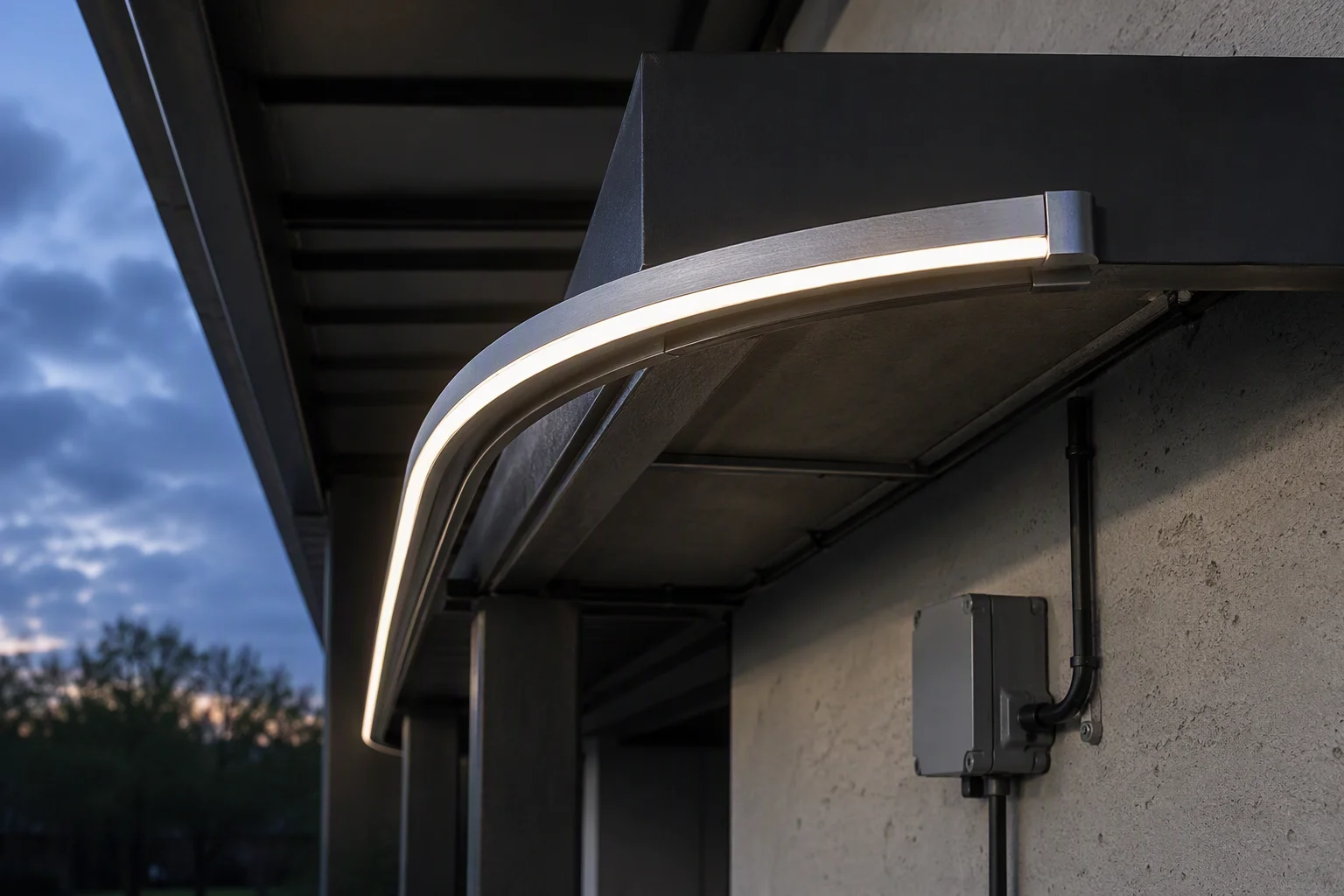
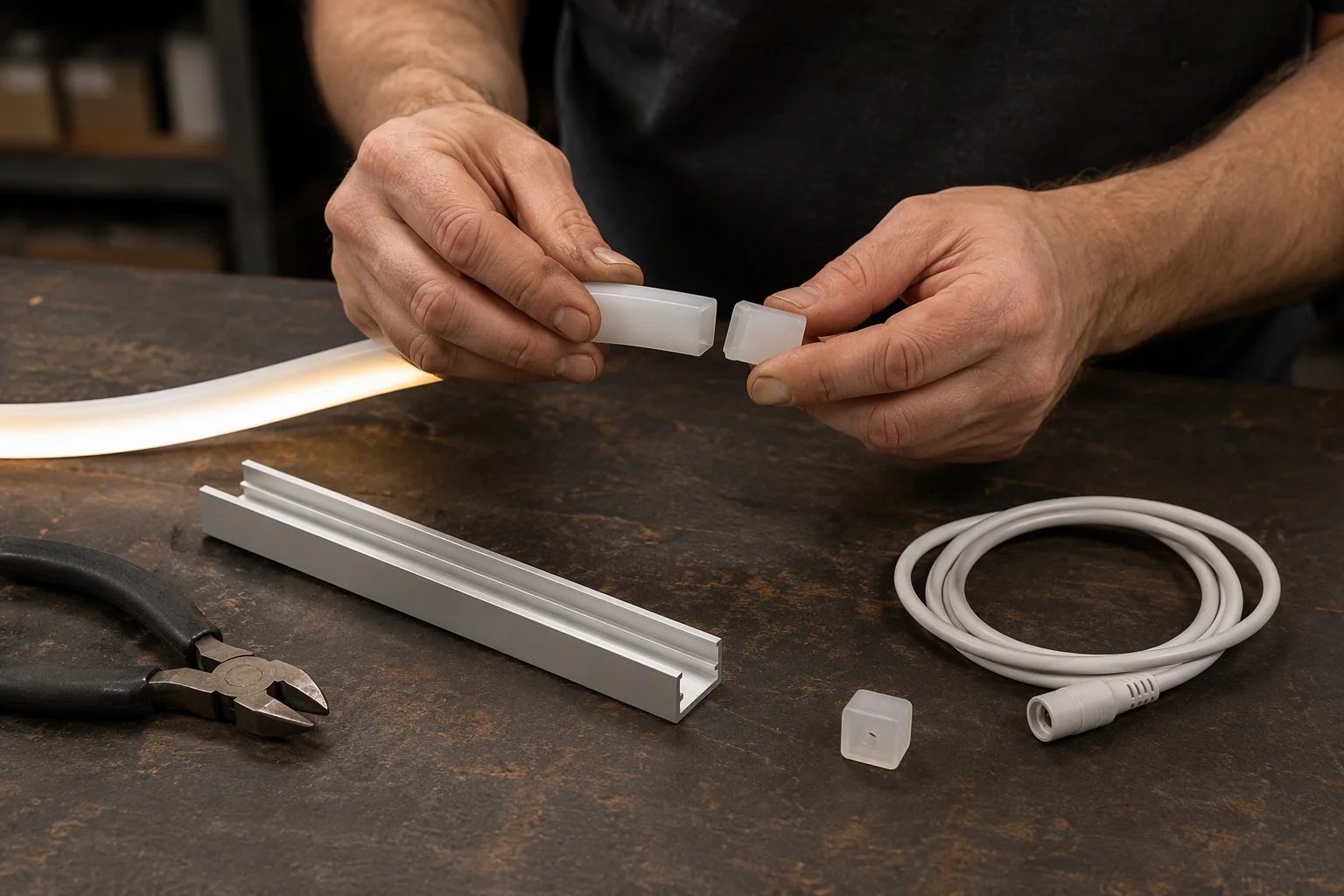
LED Neon Flex is often easier to stage because the product can be routed along a prepared channel or mounting surface. The installer still needs to respect the product's bend direction, minimum bend guidance, cut marks, end treatment, cable exit, power-supply location, and heat-management requirements. A neat installation is not achieved by forcing the product around a curve it was not designed to follow.
For wet or exposed locations, the light line alone is not enough. End caps, connectors, cable exits, channels, junction boxes, and the installation surface must be treated as part of the protection system.
Traditional neon installation
Traditional neon usually requires more coordination between the sign fabricator, electrical installer, and service team. Glass tubes must be supported without creating damaging stress, high-voltage wiring must be routed correctly, and the transformer must be accessible and protected according to the applicable electrical requirements.
For both systems, installation drawings should identify the power source, cable route, mounting surface, access points, and service clearances before fabrication begins.
How Do Maintenance and Repair Requirements Compare?
LED Neon Flex can simplify maintenance when the design allows sections, connectors, power supplies, and control components to be identified and replaced. It is still important to keep installation records: product profile, voltage, power supply model, wiring route, cut locations, and any sealing method used.
Traditional neon maintenance is more specialized because the glass tube and high-voltage transformer are integral to the sign system. A broken tube, failed electrode, transformer fault, or damaged wire may require removal and workshop repair. This does not make traditional neon unsuitable; it means the project should budget for a different service process and keep qualified support available.
How Do Appearance and Design Flexibility Affect the Choice?
LED Neon Flex is useful when the design calls for a smooth continuous line, compact profiles, controlled colour temperature, or shaped accents around furniture, cabinets, retail displays, hospitality interiors, and architectural details. The silicone or polymer housing also gives the light a more enclosed appearance.
Traditional glass neon remains valuable when the visible tube, glass craftsmanship, electrode details, and familiar sign-making character are part of the design brief. It can be the correct choice for heritage-inspired signs, restoration projects, or a deliberately exposed glass-tube aesthetic.
Do not select by a rendered image alone. Ask for a physical sample or approved mock-up at the intended viewing distance. Diffusion, tube diameter, mounting depth, wall colour, and surrounding ambient light can change the perceived result.
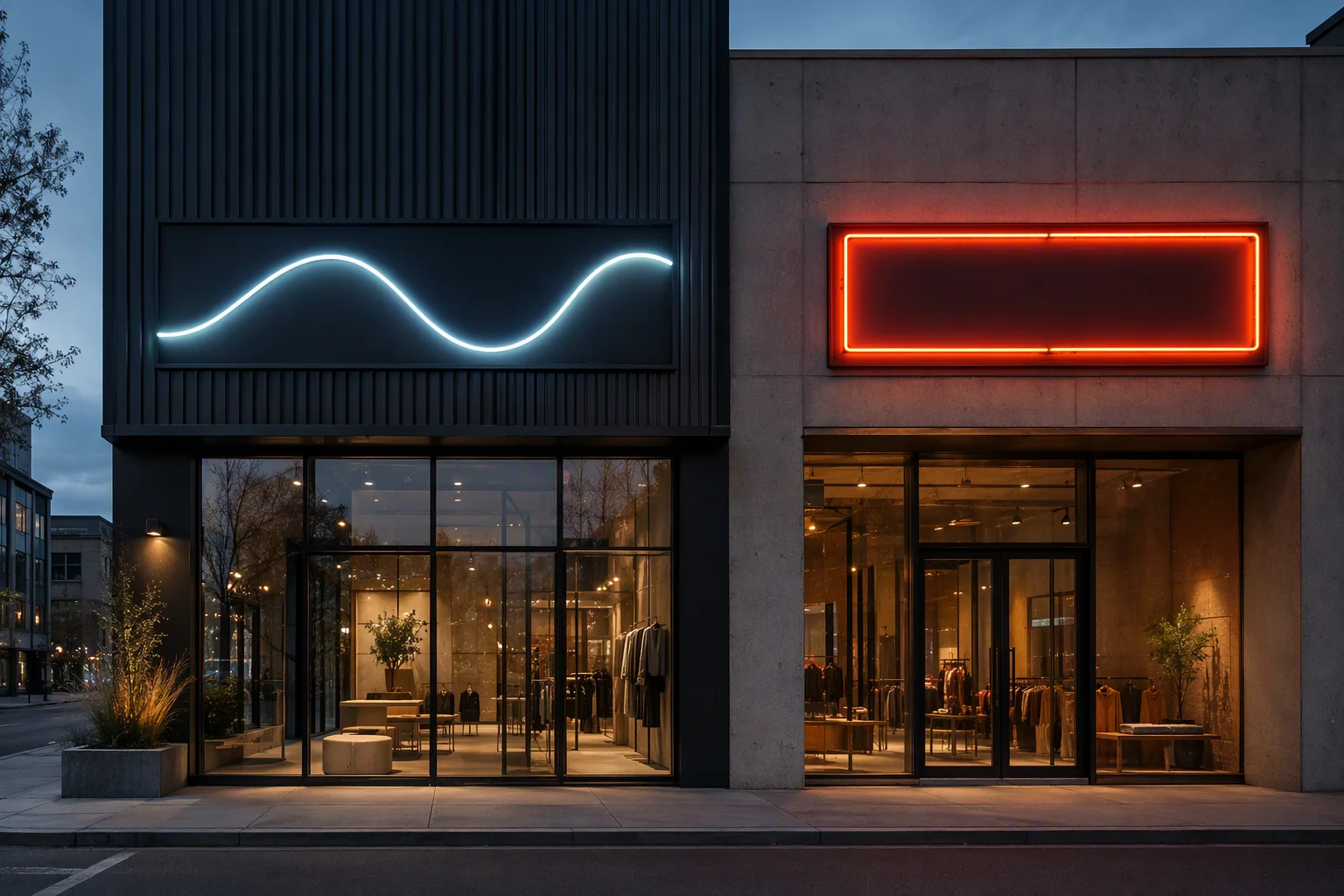
What Should Be Checked for Outdoor or Damp Locations?
Outdoor suitability is a system question. Confirm the actual protection rating and test evidence for the selected product, then inspect the complete installation: the light body, end caps, connectors, cable exits, power supply, junction boxes, channels, drainage, and sealing workmanship. A protected light body does not automatically make an unsealed connection suitable for exposure.
LED Neon Flex can be a practical choice for covered exteriors and damp locations when the exact product and installation method are specified for that environment. Traditional glass neon can also be installed outdoors, but the glass, transformer, supports, and enclosures need a coordinated sign-engineering approach.
For safety documentation, check the standards and market requirements applicable to the finished luminaire or sign system. IEC 60598-1 provides general safety requirements for luminaires; the current IEC publication is available through the IEC Webstore. It should not be treated as a substitute for product-specific testing or local electrical compliance.
How Should Buyers Compare Total Project Cost?
The purchase price is only one part of the decision. Compare fabrication, mounting hardware, power equipment, installation labour, access equipment, commissioning, expected service visits, spare parts, and the cost of replacing a damaged section or tube.
LED Neon Flex may have a lower installation burden for projects with repeated curves, difficult access, or frequent design changes. Traditional neon may remain cost-effective when the sign fabricator already has the required glass-forming and service capability, or when the glass aesthetic is the main value of the sign.
When requesting quotations, ask both suppliers to provide the same information: illuminated length, input power, power equipment, mounting method, installation environment, control method, warranty boundaries, replacement process, and exclusions. This produces a more meaningful comparison than comparing two unit prices.
Which One Should You Choose?
Choose LED Neon Flex when you need flexible routing, a protected continuous light line, easier handling, lower-voltage system planning, or a practical solution for repeated architectural curves. Choose traditional glass neon when the rigid glass tube, exposed construction, and specialist sign-making character are essential to the project.
For LEDLetsGo buyers, the most important next step is to specify the application before selecting the product: indoor or outdoor location, viewing distance, profile and emitting direction, required colour, power arrangement, mounting method, control method, and service access. A clear specification prevents the common mistake of treating every “neon” product as the same.
Frequently Asked Questions
Is LED Neon Flex the same as traditional neon?
No. LED Neon Flex uses LED light sources inside a flexible diffusing housing, while traditional neon uses rigid gas-filled glass tubes and electrodes. They can create similar sign effects, but the construction, electrical system, installation, and maintenance process are different.
Is LED Neon Flex safer to install?
It can simplify electrical planning when the selected system uses a suitable low-voltage power supply, but safety still depends on the exact product, power supply, wiring, mounting, sealing, and local requirements. Do not assume safety from the product name alone.
Does LED Neon Flex use less electricity?
It can use less energy than a comparable traditional neon installation, but the answer depends on the exact installed system. Compare input power for the full LED Neon Flex system with the tube and transformer system rather than relying on a generic technology label.
Can LED Neon Flex replace every traditional neon sign?
No. It is a strong alternative for many curved signs and architectural accents, but a project may still require the specific glass appearance, tube geometry, or restoration character of traditional neon.
Is LED Neon Flex suitable for outdoor use?
Some products are designed for exposed or damp applications and others are not. Confirm the exact rating and installation instructions, then check the end caps, connectors, cable exits, power supply, and enclosure as a complete system.
Which option is easier to repair?
LED Neon Flex can be easier to service when the installation is designed with identifiable sections, accessible power supplies, and replaceable connections. Traditional neon repairs are more specialized because glass tubes, electrodes, and transformers are part of the sign system.
Which option is better for custom shapes?
LED Neon Flex is usually more convenient for approved curves and continuous lines because the product is flexible. Traditional neon can also be custom formed, but the glass is rigid after fabrication and requires more precise handling and support.
What information should be included in an RFQ?
Include the illuminated length, profile, emitting direction, voltage, colour or colour temperature, indoor or outdoor location, mounting method, control method, power-supply requirements, delivery length, connection details, warranty boundaries, and service expectations.